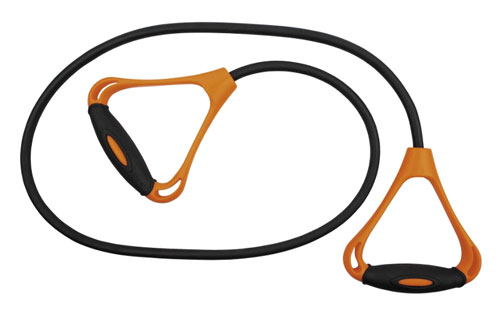
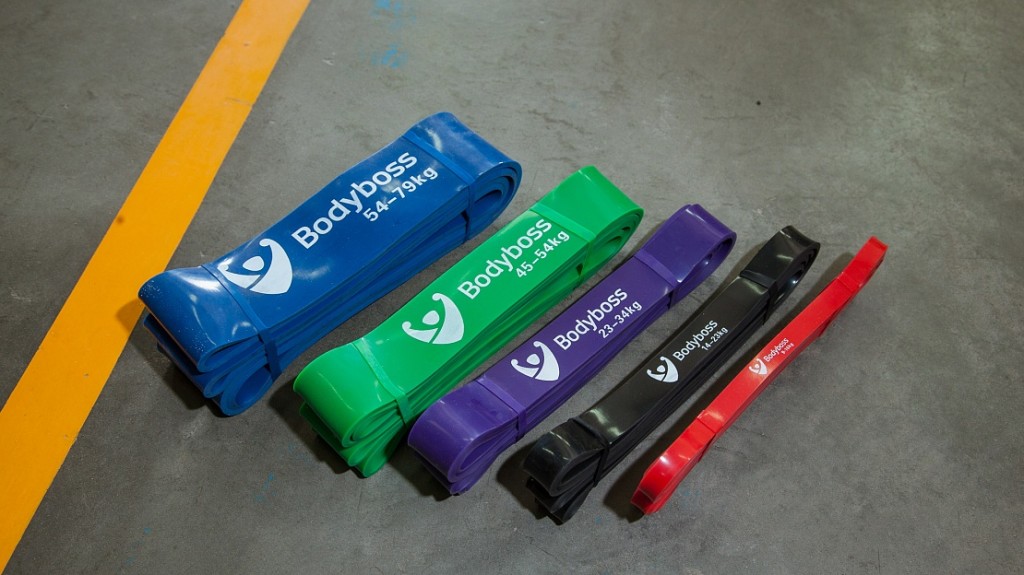
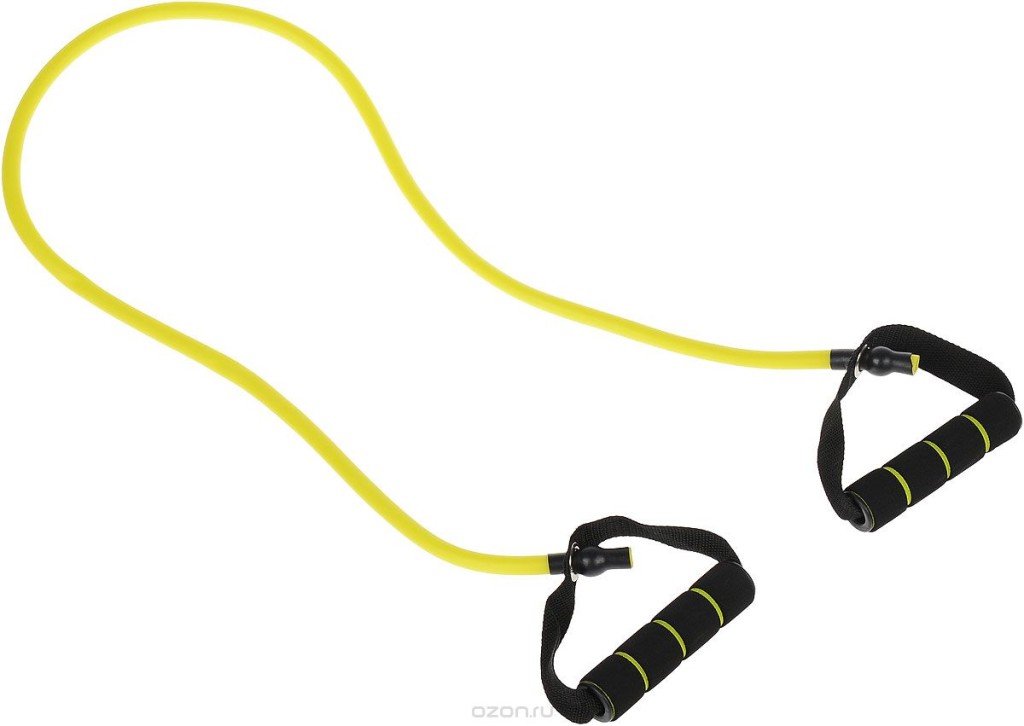
• Есть исследования, в которых ставится под сомнение равный эффект
от занятий с эспандерами и занятий на тренажерах и со свободными
весами.
• Нагрузка во время выполнения упражнений с эспандерами
увеличивается по ходу движения, также на нее влияют собственные
антропометрические данные. В результате, сложно точно определить
реальную нагрузку / дозировать и увеличивать ее.
• Невозможность подступиться к своему максимуму. Обычно
максимальное сопротивление для эспандеров – в рамках 50 кг. Также
могут возникнуть проблемы с плавной прогрессией.
Научные ссылки:
1. Martins, W. R., de Oliveira, R. J., Carvalho, R. S., de Oliveira
Damasceno, V., da Silva, V. Z. M., & Silva, M. S. (2013).
Elastic resistance training to increase muscle strength in elderly:
A systematic review with meta-analysis. Archives of gerontology and
geriatrics.{PubMed}
2. Stryła, W., Pogorzała, A. M., Rogala, P., & Nowakowski, A.
(2012). Algorithm of physical therapy exercises following total hip
arthroplasty. Polish Orthopedics & Traumatology, 78,
33-39.{PubMed}
3. Witvrouw, E., Werner, S., Mikkelsen, C., Van Tiggelen, D.,
Berghe, L. V., & Cerulli, G. (2005). Clinical classification of
patellofemoral pain syndrome: guidelines for non-operative
treatment. Knee Surgery, Sports Traumatology, Arthroscopy, 13(2),
122-130.{PubMed}
4. Malone, T., Blackburn, T. A., & Wallace, L. A. (1980). Knee
rehabilitation. Physical Therapy, 60(12), 1602-1610.{PubMed}
5. Heijne, A., Axelsson, K., Werner, S., & Biguet, G.
(200😎.
Rehabilitation and recovery after anterior cruciate ligament
reconstruction: patients’ experiences. Scandinavian Journal of
Medicine & Science in Sports, 18(3), 325-335.{PubMed}
6. Hostler, D. C., Schwirian. I., Campos. G., Toma, K., Crill, M.
T., Hagerman, G. R., & Staron, R. S. (2001). Skeletal muscle
adaptations in elastic bands resistance- trained young men and
women. Journal of Applied Physiology, 86:112–118.
7. Colado, J. C., & Triplett, N. T. (200😎. Effects of a short-term
resistance program using elastic bands versus weight machines for
sedentary middle-aged women. The Journal of Strength &
Conditioning Research, 22(5), 1441-1448.{PubMed}
8. Colado, J. C., Garcia-Masso, X., Pellicer, M., Alakhdar, Y.,
Benavent, J., & Cabeza-Ruiz, R. (2010). A comparison of elastic
tubing and isotonic resistance exercises. International Journal of
Sports Medicine, 31(11), 810.{PubMed}
9. Thiebaud, R. S., Loenneke, J. P., Fahs, C. A., Rossow, L. M.,
Kim, D., Abe, T., Anderson, M. A., Young, K. C., Bemben, D. A.,
& Bemben, M. G. (2013). The effects of elastic band resistance
training combined with blood flow restriction on strength, total
bone‐free lean body mass and muscle thickness in postmenopausal
women. Clinical Physiology and Functional Imaging, 33,
pp344–352.{PubMed}
10. Cronin, J., McNair, P. J., & Marshall, R. N. (2003). The
effects of bungy weight training on muscle function and functional
performance. Journal of Sports Sciences, 21(1), 59.{PubMed}
11. Richards, J. A., & Dawson, T. A. (2009). Optimizing
exercise outcomes: The efficacy of resistance training using
conventional vs. novel movement arcs. The Journal of Strength &
Conditioning Research, 23(7), 2015-2024.{PubMed}